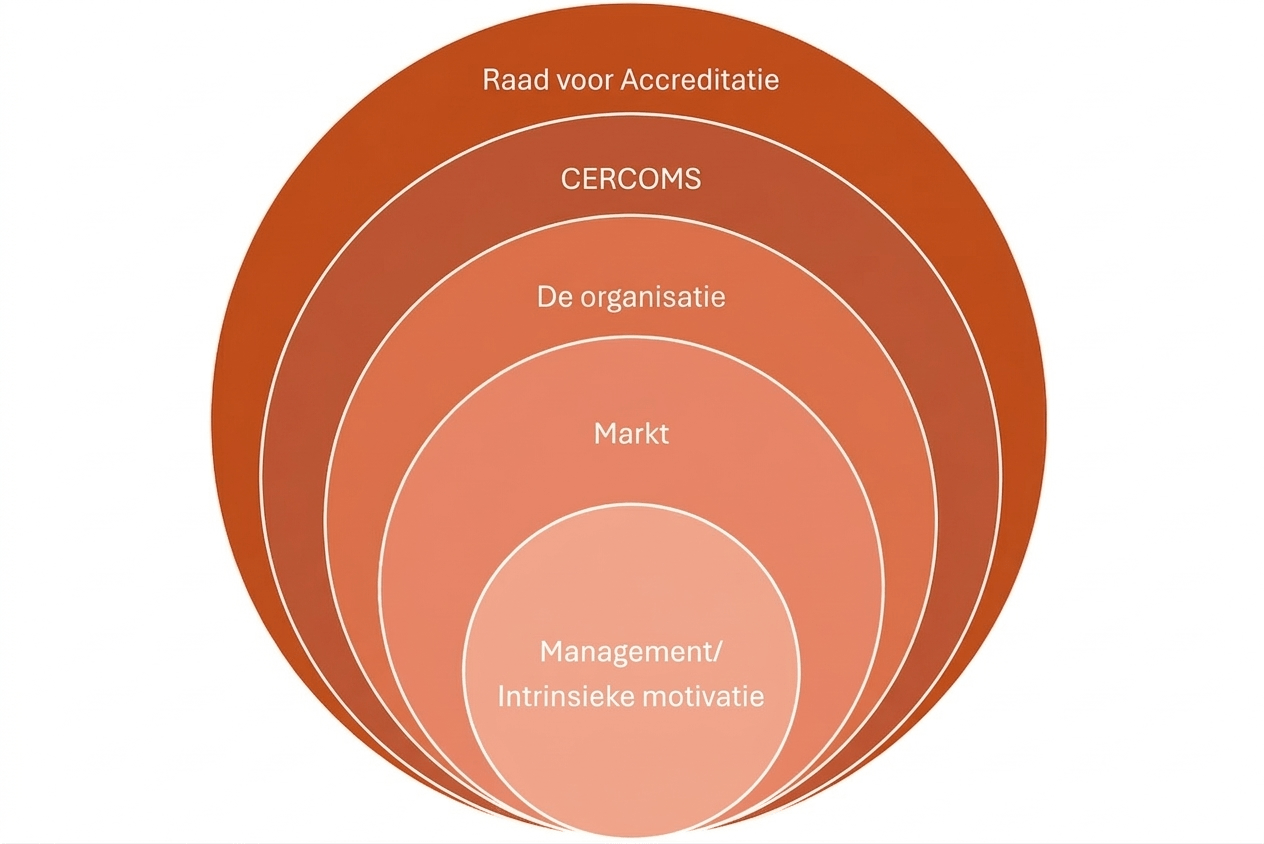
In the market, we increasingly see certificates being issued without accreditation. At first glance, there appears to be little difference. The standard is referenced, the document looks professional, and the terminology is comparable.
However, the distinction is fundamental.
We issue certificates exclusively under the accreditation of the Raad voor Accreditatie, registration number C-714. Our certificates carry the official RvA logo and are subject to independent oversight.
This means that our organisation is periodically assessed on its methods, decision-making and independence. Auditors, processes and files are also reviewed. This demonstrably ensures that certification is carried out in accordance with the applicable international standards.
In the case of unaccredited certification, this external oversight is absent. There is no independent party that systematically verifies how audits are conducted or how certification decisions are made. This has direct implications for the reliability and recognition of the certificate.
For organisations that use certification in tenders, contractual obligations or in dealings with regulators, this is not a minor detail. It concerns verifiability, independence and international recognition.
That is why we deliberately choose full accreditation. Always under the supervision of the Raad voor Accreditatie, and always with the RvA logo C-714 on the certificate.